


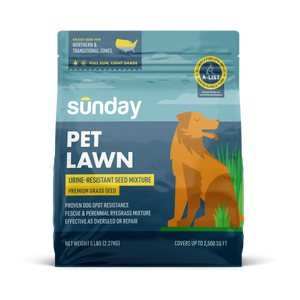
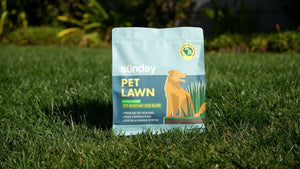


Pet Lawn Grass Seed
Guaranteed Safe Checkout
Pet Lawn Grass Seed
The grass seed built for dog lawns
Most grass seed was never designed with dogs in mind. Pet Lawn was.
We tested over 160 grass seed varieties for urine resistance, traffic tolerance, and recovery speed. The winner is a blend of two premium turf-type tall fescues and one premium perennial ryegrass. Deep roots that hold up under heavy paw traffic. Dark green color that stays rich through the season. Rapid recovery that makes dog spots a lot less permanent.
It grows in full sun to partial shade and works across a wide range of soils. For northern and transitional region lawns only.
Available in custom lawn plans.
Not a subscriber yet? Build your plan.
What's in the bag
Urine-resistant blend
Tested against 160+ varieties for dog spot recovery
Deep-rooting fescue
Holds up under heavy paw traffic and bounces back fast
Dark green color
Rich, dense turf that stays consistent through the season
85% germination rate
Reliable establishment when seeded at the right time
99.9% weed-free guarantee
Clean seed, no unwanted surprises
5 lb bag covers 2,500 sq. ft.
Need more?
The 2-pack has you covered.
Already dealing with active urine spots? Treat the soil first with
Pet Patch
, then seed. Pet Patch handles the damage underneath. Pet Lawn handles the grass on top.
How to use
Best seeding windows are early fall and spring when soil temps are between 50 and 65°F. That's when fescue and ryegrass germinate best.
For spot repair:
Loosen soil, spread at 8 lbs per 1,000 sq. ft., rake lightly. Water once or twice daily until germination.
For overseeding:
Mow short, spread at 2 lbs per 1,000 sq. ft., water consistently until established.
Limit dog and foot traffic on seeded areas for 3-4 weeks to give seeds a real chance.
What is a urine-resistant seed mixture and how does it help?
A urine-resistant seed mixture is a blend of grass varieties selected for their ability to withstand the nitrogen and salt load from dog urine. Pet Lawn uses two premium tall fescues and a perennial ryegrass chosen from 160+ tested varieties for deep rooting, traffic tolerance, and faster recovery from dog spot damage. The result is grass that's scientifically proven to be dog-resistant. (Not just a marketing claim here.)
Can I use Pet Lawn Grass Seed to overseed my whole lawn or just for spots?
Use it for both. For seeding new lawn areas or heavy repair where grass has died, seed at 8 lbs per 1,000 sq. ft. For overseeding the full lawn to build urine resistance across the whole yard, seed at 2 lbs per 1,000 sq. ft. Many customers with dogs do both at the same time.
When is the best time to plant Pet Lawn Grass Seed?
Early fall is the best window, typically late August through October when soil temps are between 50 and 65°F. Spring works too, though fall establishment gives roots more time to develop before summer heat arrives.
How long should I keep my dog off the lawn after seeding?
At least 3 to 4 weeks for heavy repair or new lawn areas. Germination needs consistent moisture and minimal disturbance. Once the new grass has been mowed at least once, you're good to let them back out.
Is Pet Lawn Grass Seed safe for dogs?
Yep, all Sunday grass seed is safe. Limit traffic during germination for best results, but there are no harmful ingredients to worry about.
How long does it take to germinate?
Tall fescue typically germinates in 7 to 14 days under good conditions. Perennial ryegrass can show in as few as 5 to 7 days. Consistent moisture and soil temps between 50 and 65°F are the two biggest factors.